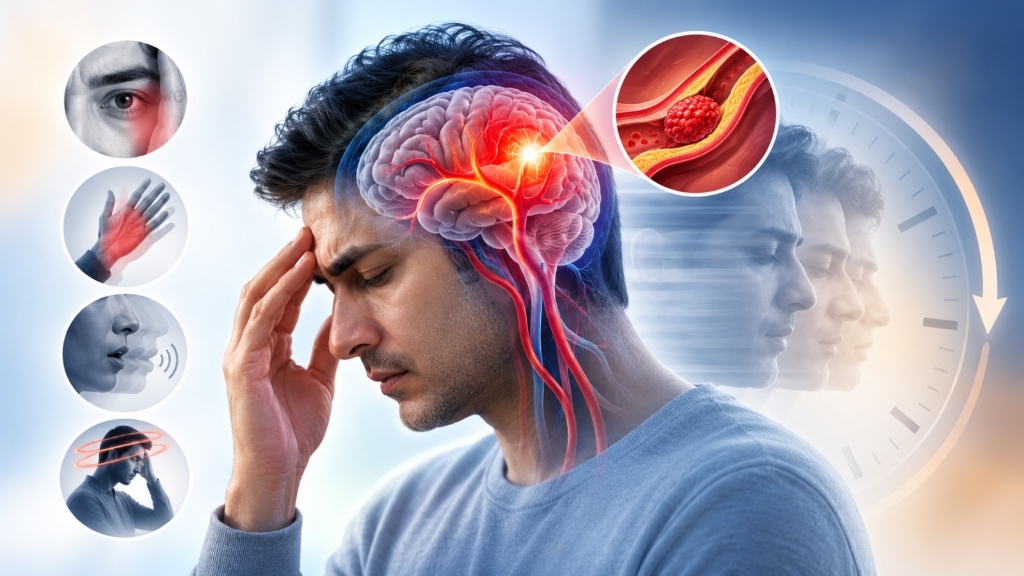
TIA / Mini Stroke – Symptoms That Disappear: Why You Should Never Ignore Them
The Symptoms Disappeared. The Warning Didn’t.
Chief Neurologist & Founder Director •
NHS Neurocare, Jalandhar
Your father’s speech suddenly becomes unclear.
Your mother feels weakness in one arm.
Someone suddenly loses balance, struggles to see clearly or experiences numbness on one side of the body.
You become worried — but within a few minutes, everything seems normal again.
“Ab main bilkul theek hoon.”
It is natural to feel relieved.
But this is exactly when you should not ignore what happened.
Sudden stroke-like symptoms that disappear may be caused by a Transient Ischaemic Attack (TIA), commonly referred to as a mini stroke. A TIA happens when the blood supply to part of the brain is temporarily disrupted.
The symptoms may disappear completely, but the warning should not.
A suspected TIA requires urgent medical assessment, because it may indicate an underlying problem that could increase the risk of a future stroke.
At NHS Neurocare, NHS Hospital, Jalandhar, patients with suspected TIA and stroke have access to 24×7 Neuro Emergency Care, advanced brain imaging and specialist neurological assessment under an experienced multidisciplinary team led by Dr Sandeep Goel, DM Neurology, Chief Neurologist & Founder Director, with 27+ years of experience in Neurology.
Because when your brain gives you a warning, listening to it early could make all the difference.
What Is a TIA or Mini Stroke?
A Transient Ischaemic Attack (TIA) occurs when the blood supply to part of the brain is temporarily interrupted.
This can cause symptoms similar to an ischaemic stroke, including sudden weakness, facial drooping, numbness, difficulty speaking or changes in vision.
The major difference is that the symptoms of a TIA are temporary and may resolve completely.
This is why a TIA is commonly called a “mini stroke”.
However, the word “mini” can be misleading.
The symptoms may be brief, but the event itself deserves serious medical attention. A TIA may indicate an underlying problem involving blood vessels, blood flow or the heart and can be an important warning sign of a future stroke.
Never assume that disappearing symptoms mean there is nothing to worry about.
What Are the Symptoms of a TIA?
TIA symptoms generally begin suddenly and may resemble the warning signs of stroke.
The symptoms experienced depend on which area of the brain is temporarily affected.
Common warning signs may include:
1. Sudden Facial Drooping
One side of the face may suddenly feel weak or numb.
The person’s smile may become uneven or one side of the mouth may appear to droop.
Even if the face returns to normal after a few minutes, the episode should not be dismissed.
2. Sudden Weakness or Numbness
A person may suddenly experience:
- weakness in an arm or leg
- numbness on one side of the body
- difficulty holding an object
- an arm suddenly dropping
- difficulty walking
The weakness may completely disappear later.
That does not make the episode unimportant.
3. Sudden Speech Difficulty
A person experiencing a TIA may suddenly:
- slur their words
- struggle to find the correct words
- speak in an unusual or confused manner
- have difficulty understanding others
- temporarily lose the ability to speak
If someone’s speech suddenly changes — even briefly — it should be considered a neurological warning sign requiring urgent assessment.
4. Sudden Vision Changes
A TIA may cause sudden problems with vision, such as:
- blurred vision
- double vision
- temporary loss of vision
- difficulty seeing from one or both eyes
A temporary episode of vision loss should not simply be ignored because normal vision returns.
5. Sudden Dizziness or Loss of Balance
A person may suddenly feel:
- extremely dizzy
- unsteady while walking
- unable to maintain balance
- poorly coordinated
Dizziness can have many causes and does not automatically indicate a TIA.
However, sudden unexplained dizziness accompanied by weakness, numbness, speech difficulty, double vision or severe imbalance requires urgent medical evaluation.
Remember FAST – Even If the Symptoms Disappear
One of the simplest ways to recognise common stroke and TIA warning signs is FAST.
Ask the person to smile.
Is one side of the face drooping or numb?
Ask the person to raise both arms.
Is one arm weak, numb or drifting downwards?
Ask the person to repeat a simple sentence.
Is their speech slurred, confused or unusual?
If any of these symptoms appear suddenly, seek emergency medical attention immediately.
Do not wait to see whether the symptoms disappear.
And if they have already disappeared, do not assume the danger has passed.
“It Lasted Only Five Minutes. Do We Still Need to Go to Hospital?”
Yes.
This is one of the most important things families need to understand about TIA.
A person may experience facial weakness, arm numbness or speech difficulty for only a few minutes and then feel completely normal.
They may say:
“It was probably weakness.”
“Maybe my sugar was low.”
“I was just tired.”
“I’m fine now.”
But without proper medical assessment, it may not be possible to know why those symptoms occurred.
If the symptoms suggest a possible TIA or stroke, they should be taken seriously regardless of how quickly they disappear.
Do not wait for the symptoms to happen again before seeking medical help.
Why Is a TIA Considered a Warning Sign?
A TIA and an ischaemic stroke can share a similar underlying mechanism — disruption of blood flow to the brain.
The temporary nature of TIA symptoms should therefore not create false reassurance.
A suspected TIA gives doctors an opportunity to investigate why the episode occurred and identify factors that may increase the person’s future stroke risk.
Depending on the individual, possible contributing factors may include:
- high blood pressure
- diabetes
- high cholesterol
- narrowing of arteries
- smoking
- obesity
- heart disease
- atrial fibrillation or other abnormal heart rhythms
- previous TIA or stroke
- certain blood-clotting disorders
- other vascular risk factors
Identifying and appropriately managing these factors can form an important part of stroke prevention.
TIA or Stroke – How Can You Tell the Difference?
When symptoms first appear, you should not try to distinguish between a TIA and stroke at home.
Both may initially produce similar neurological symptoms.
A person with sudden facial drooping, arm weakness and speech difficulty could be experiencing a TIA — or an evolving stroke requiring immediate treatment.
The fact that symptoms subsequently disappear does not mean that waiting was safe.
The safest approach is simple:
Let an experienced medical team determine what has happened.
What Should You Do During a Suspected TIA?
If someone suddenly develops stroke-like symptoms:
Note the Time
Remember the exact time the symptoms started.
If the precise time is uncertain, note the last time the person was known to be completely normal.
Remember the Symptoms
Try to remember exactly what happened.
Was the face drooping?
Which arm became weak?
Was speech slurred?
Was there temporary vision loss?
Was the person suddenly unable to balance?
How long did the symptoms last?
This information can be particularly valuable because the symptoms may have disappeared by the time the person reaches hospital.
Seek Medical Attention Immediately
Do not delay simply because symptoms appear mild.
Do not wait for them to happen again.
Do not allow the person to “sleep it off”.
And most importantly:
Do not cancel medical evaluation because the symptoms have disappeared.
How Is a TIA Diagnosed?
Diagnosing a TIA can sometimes be challenging because neurological symptoms may have completely disappeared before the patient is examined.
An experienced neurologist will therefore consider several factors, including:
- symptoms experienced
- how suddenly they started
- how long they lasted
- patient’s medical history
- previous neurological events
- existing stroke risk factors
- neurological examination
- brain and vascular imaging
- cardiac evaluation
- relevant laboratory investigations
The aim is not only to determine whether the episode was consistent with a TIA, but also to investigate what may have caused it and how future stroke risk can be reduced.
Tests That May Be Required After a Suspected TIA
Investigations are selected according to the patient’s symptoms, medical history and clinical assessment.
They may include:
CT Scan of the Brain
CT imaging can provide important information about the brain and help doctors evaluate possible causes of sudden neurological symptoms.
MRI Brain
MRI provides detailed images of the brain and may help identify evidence of recent brain injury in appropriate patients.
CT Angiography / MR Angiography
Vascular imaging allows doctors to assess blood vessels supplying the brain and look for narrowing, blockage or other vascular abnormalities.
Carotid Artery Assessment
The carotid arteries carry blood towards the brain.
When clinically indicated, doctors may evaluate these arteries to identify significant narrowing or disease that could contribute to TIA or stroke risk.
ECG
An electrocardiogram evaluates the electrical activity and rhythm of the heart.
Abnormal heart rhythms, particularly atrial fibrillation, may increase the risk of blood clots travelling to the brain.
Echocardiography
In selected patients, an echocardiogram may be recommended to assess the structure and function of the heart.
Blood Tests
Blood investigations may include assessment of:
- blood sugar
- cholesterol
- blood counts
- kidney function
- clotting parameters
- other investigations according to the patient’s clinical condition
The treating neurologist will determine which investigations are appropriate for each individual.
What Happens After a TIA?
Treatment following a suspected or confirmed TIA depends on the underlying cause and the patient’s individual risk factors.
The main objective is to identify and manage factors that may contribute to a future stroke.
Management may involve medicines and strategies addressing:
- blood clot formation
- high blood pressure
- high cholesterol
- diabetes
- abnormal heart rhythms
- carotid artery disease
- smoking
- obesity
- physical inactivity
Some patients may require further specialist evaluation or procedures depending on the cause identified.
There is no single treatment suitable for every TIA patient.
This is why timely evaluation by an experienced neurological team is important.
Can Lifestyle Changes Reduce Stroke Risk After a TIA?
Lifestyle changes may form an important part of long-term stroke prevention alongside medical treatment prescribed by your doctor.
Depending on individual circumstances, doctors may recommend:
Stop Smoking
Smoking damages blood vessels and is associated with increased cardiovascular and stroke risk.
Control Blood Pressure
High blood pressure is an important modifiable risk factor for stroke.
Regular monitoring and appropriate treatment can be an important part of prevention.
Manage Diabetes
Appropriate blood glucose management can help reduce vascular complications associated with diabetes.
Manage Cholesterol
High cholesterol can contribute to fatty deposits within arteries. Your doctor may recommend lifestyle changes, medication or both depending on your individual risk.
Maintain a Healthy Weight and Stay Active
Maintaining an appropriate body weight and regular physical activity can contribute to cardiovascular and overall health.
Take Prescribed Medicines Regularly
Never start, stop or alter antiplatelet, anticoagulant, blood-pressure, cholesterol-lowering or other medicines without medical advice.
TIA & Stroke Care Led by Dr Sandeep Goel
At NHS Neurocare, NHS Hospital, Jalandhar, the Neurology team is led by Dr Sandeep Goel, DM Neurology, Chief Neurologist & Founder Director, with 27+ years of experience in Neurology.
With extensive experience in the diagnosis and management of stroke, TIA (Transient Ischaemic Attack) and complex neurological conditions, Dr Sandeep Goel is also experienced in interventional stroke management.
For patients experiencing temporary stroke-like symptoms, specialist neurological assessment is particularly important because symptoms may have already disappeared by the time they reach hospital.
The objective is not simply to assess what happened.
It is to understand why it happened and what can be done to reduce the risk of it happening again.
NHS Neurocare – TIA and Stroke Evaluation in Jalandhar
When someone experiences temporary stroke symptoms, families often ask:
“Where should we take them if they’re already feeling normal?”
A suspected TIA still requires urgent neurological assessment.
At NHS Neurocare, NHS Hospital, Jalandhar, patients with suspected TIA and stroke have access to a multidisciplinary neurological care pathway supported by advanced diagnostic and emergency facilities.
NHS Neurocare’s stroke-care infrastructure includes:
- 24×7 Neuro Emergency Care
- Experienced Neurologists and Neurosurgeons
- Dedicated Stroke ICU
- CT and MRI within the Emergency Department
- Emergency Operation Theatre
- Advanced Neuroimaging
- DSA and advanced neurovascular facilities
- Interventional Neurology and Neurovascular Expertise
- Mechanical Thrombectomy for eligible stroke patients
- Thrombolysis for eligible stroke patients
- Neurocritical Care
- Rehabilitation and Physiotherapy Support
Having neurological expertise, emergency assessment, advanced imaging and critical care available through an integrated stroke pathway can support timely diagnosis and appropriate clinical decision-making.
Multidisciplinary Stroke & TIA Care
Stroke and TIA care can involve more than one medical speciality.
Depending on the patient’s condition and investigation findings, care at NHS Neurocare may involve specialists from:
- Neurology
- Neurosurgery
- Interventional Radiology
- Emergency Medicine
- Critical Care
- Cardiology
- Radiology
- Rehabilitation and Physiotherapy
This multidisciplinary approach is particularly valuable because preventing another neurological event often begins with identifying the cause behind the first warning.
Don’t Wait for a Bigger Warning
A TIA can be easy to dismiss precisely because it disappears.
A hand became weak — but only for ten minutes.
Speech became unclear — but then returned to normal.
Vision disappeared briefly — but came back.
Balance was suddenly lost — but the person is walking normally again.
It is natural to feel reassured when symptoms disappear.
But neurological symptoms should not be judged only by how long they lasted.
They should also be judged by what they could mean.
The Symptoms May Disappear. The Warning Shouldn’t Be Ignored.
If you or someone in your family develops sudden facial weakness, arm or leg weakness, numbness, speech difficulty, vision changes or unexplained severe imbalance, seek urgent medical assessment.
Even If the Symptoms Disappear.
NHS Neurocare
TIA & Stroke Evaluation | 24×7 Neuro Emergency | NHS Hospital, Jalandhar
Neurology Team Led by Dr Sandeep Goel, DM Neurology
Chief Neurologist & Founder Director | 27+ Years of Experience
Because Every Second Shapes Recovery.
Frequently Asked Questions About TIA / Mini Stroke
What is a TIA or mini stroke?
A Transient Ischaemic Attack (TIA) occurs when blood flow to part of the brain is temporarily disrupted. It can produce sudden stroke-like neurological symptoms that subsequently resolve.
How long do TIA symptoms last?
TIA symptoms are temporary and may resolve quickly. Regardless of how briefly they last, suspected TIA symptoms require urgent medical assessment.
What are the common symptoms of a TIA?
Symptoms may include sudden facial weakness, arm or leg weakness or numbness, speech difficulty, vision changes, dizziness, severe balance problems or other sudden neurological changes.
Can you feel completely normal after a TIA?
Yes. A person may feel completely normal after the symptoms resolve. This is one reason TIAs can be overlooked. Feeling normal afterwards does not mean the episode should be ignored.
Is a mini stroke dangerous?
The term “mini stroke” can make a TIA sound less important than it is. A suspected TIA should be treated seriously because it may indicate an increased risk of a future stroke.
Should I go to hospital if TIA symptoms have disappeared?
Yes. Stroke-like symptoms that have resolved still require urgent medical evaluation to determine what happened and assess future stroke risk.
Can a TIA happen more than once?
Yes. Some people may experience more than one TIA. Recurrent temporary neurological symptoms should never be ignored.
Can younger people have a TIA?
Although TIA and stroke risk generally increases with age, they can also occur in younger adults. Sudden neurological symptoms should be medically evaluated regardless of age.
What tests may be performed after a suspected TIA?
Depending on the individual case, investigations may include brain imaging, vascular imaging, ECG, cardiac assessment, blood tests and evaluation of stroke risk factors.
Who treats TIA and stroke at NHS Neurocare, Jalandhar?
The Neurology team at NHS Neurocare, NHS Hospital, Jalandhar, is led by Dr Sandeep Goel, DM Neurology, Chief Neurologist & Founder Director, with 27+ years of experience in Neurology, supported by a multidisciplinary team involved in stroke and neurovascular care.
Where should I go for TIA or mini stroke symptoms in Jalandhar?
Suspected TIA or stroke symptoms require urgent medical assessment. NHS Neurocare at NHS Hospital, Jalandhar provides 24×7 Neuro Emergency Care supported by advanced brain imaging and specialist neurological services.
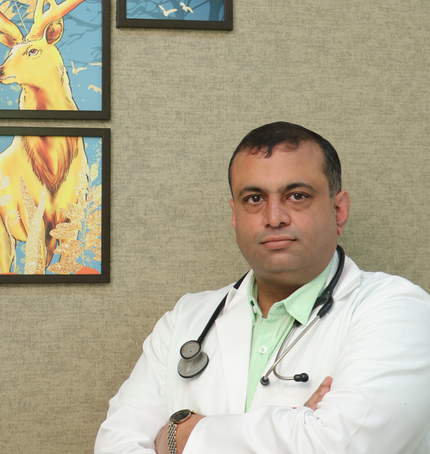
Dr. Sandeep Goel
DM Neurology | Chief Neurologist & Founder Director (27+ Years Experience)
Pioneer in acute stroke management, mechanical thrombectomy, and comprehensive TIA evaluation in Punjab. Leading the 24×7 Stroke & Neuro Emergency Team at NHS Neurocare, NHS Hospital, Jalandhar.
Experienced Stroke-Like Symptoms That Disappeared?
Never wait for symptoms to return. Early TIA assessment and immediate intervention prevent irreversible future strokes. Access our 24×7 Neuro Emergency now.