Advanced Low-Radiation CT Scan
Fast, Accurate & Advanced CT Imaging for Early Diagnosis at NHS Neurocare (a unit of NHS Hospital)
Fast, Accurate & Safer CT Diagnostics
At NHS Neurocare (a unit of NHS Hospital), we are committed to delivering advanced diagnostic imaging that supports timely and accurate medical decisions. Our latest-generation Low-Radiation CT Scanner combines high-speed scanning with exceptional image quality, enabling our specialists led by Dr Sandeep Goel (DM Neurology) to diagnose neurological and other medical conditions with precision.
Whether evaluating a brain stroke, head injury, spinal disorder, or other emergency condition, our advanced CT technology provides rapid results that help initiate treatment without unnecessary delay. With reduced radiation exposure and high-resolution imaging, we ensure safer diagnostics without compromising accuracy.
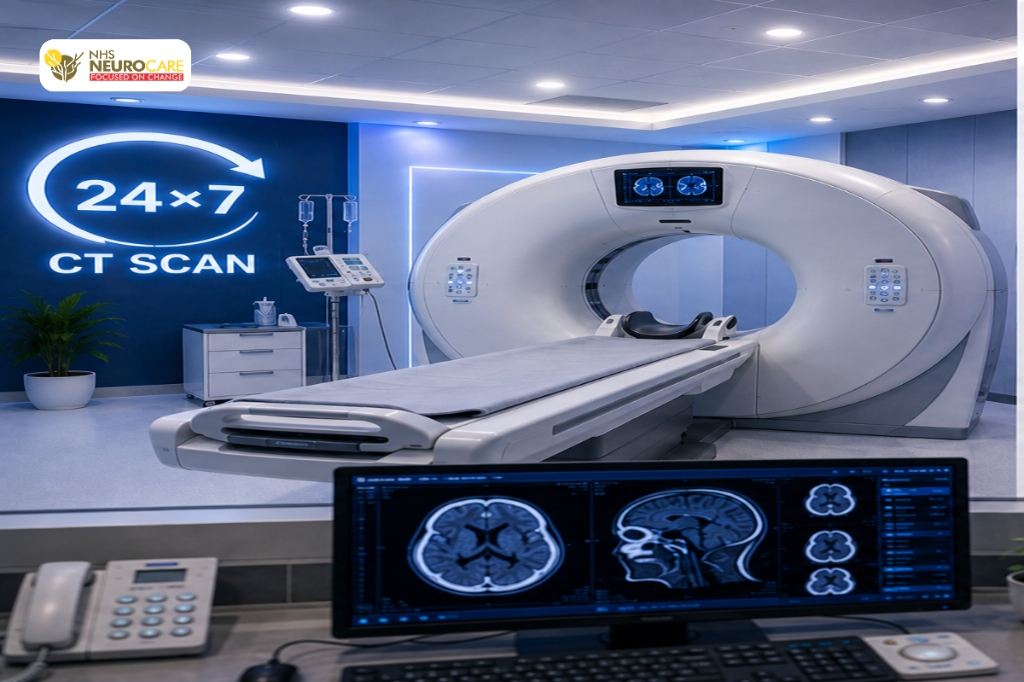
What is a CT Scan?
A Computed Tomography (CT) Scan is an advanced imaging investigation that uses X-rays and sophisticated computer technology to create detailed cross-sectional images of the body's internal organs, bones, blood vessels, and soft tissues.
It plays a vital role in the early diagnosis of neurological emergencies, brain stroke differentiation (ischaemic vs. haemorrhagic), trauma, and various acute medical conditions.
Benefits of Our Advanced CT Scanner

Latest Generation High-Speed CT Technology
Low-Radiation Dose Reduction Technology
High-Resolution Brain & Vascular Scans
Instant Stroke Differentiation in 5 Minutes
Minimal Motion Artifacts for Agitated Patients
Located Directly Inside Emergency 24x7
Conditions Diagnosed with CT Scan
Brain: Stroke, Haemorrhage, Head Injury, Tumours, Skull Fractures Spine: Spinal Trauma, Vertebral Fractures, Degenerative Disease Vascular: Angiography, Aneurysms, Vessel Blockages Trauma: Multi-organ Injury, Chest, Abdomen & Bone FracturesHow is a CT Scan Performed?
Prescription
Requisition by emergency doctor or specialist
Positioning
Comfortable placement on CT gantry table
Rapid Scan
Ultra-fast low-radiation acquisition in 5 mins
Radiology Review
Detailed analysis by expert radiologists
Treatment Plan
Immediate treatment decision & consultation
Why Choose NHS Neurocare (a unit of NHS Hospital)?
Frequently Asked Questions
Experience Advanced CT Imaging at NHS Neurocare
At NHS Neurocare (a unit of NHS Hospital), our latest-generation Low-Radiation CT Scanner delivers fast, accurate, and reliable diagnostic imaging to support timely medical decisions. Backed by experienced specialists and advanced technology, we are committed to providing precise diagnosis, safer imaging, and better outcomes for every patient.