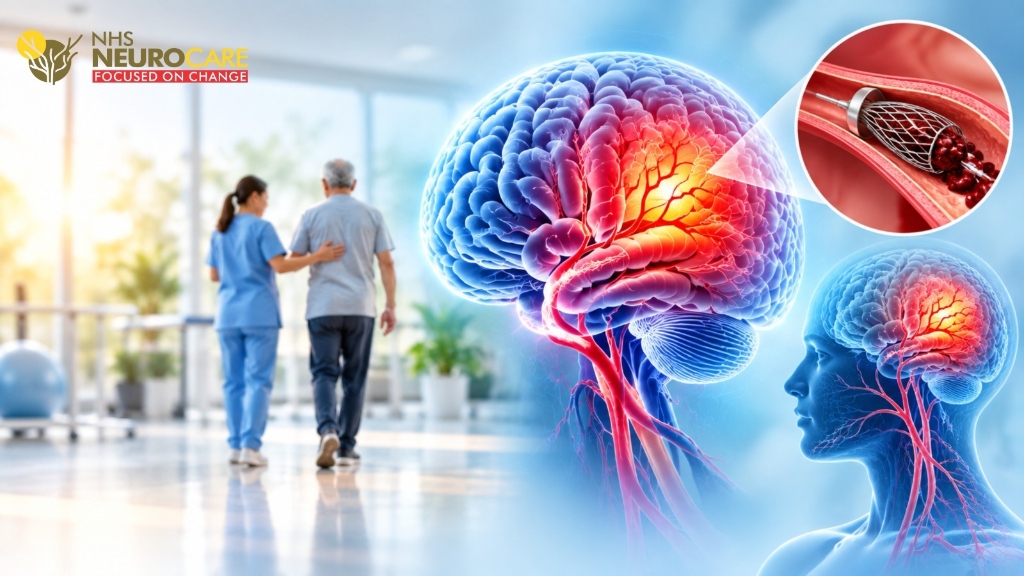
How to Prevent a Second Stroke: Protecting Your Brain After the First Warning
One Stroke Is a Warning. The Next One May Be Preventable.
Recovering from a stroke brings enormous relief to a patient and their family.
The weakness may improve. Speech may become clearer. Walking may gradually return. Life may begin to feel normal again.
And that is often when an important question gets forgotten:
“What can we do to prevent another stroke?”
Having already experienced a stroke or Transient Ischaemic Attack (TIA) can increase the risk of another stroke. Prevention therefore becomes an important part of long-term neurological care.
The good news is that many factors associated with recurrent stroke can be identified, treated or better controlled.
At NHS Neurocare, NHS Hospital, Jalandhar, our approach extends beyond treating the immediate stroke. We focus on identifying possible causes, controlling risk factors, supporting rehabilitation and helping patients and families build a long-term plan for secondary stroke prevention.
Because surviving a stroke matters.
Preventing the next one matters too.
What Is a Recurrent or Second Stroke?
A recurrent stroke is a new stroke occurring in someone who has previously experienced a stroke.
It may occur because the underlying cause of the first stroke remains present or because important risk factors such as high blood pressure, diabetes, high cholesterol, heart rhythm abnormalities or vascular disease are not adequately controlled.
This is why treatment should not necessarily stop when a patient leaves hospital.
After the immediate recovery phase, attention turns towards an equally important goal:
Reducing the Risk of Another Stroke
This process is known as secondary stroke prevention.
It may involve medicines, regular neurological follow-up, management of existing medical conditions, lifestyle changes and further investigation or treatment of the underlying cause.
Why Can a Second Stroke Happen?
Stroke is not a single disease with a single cause.
An ischaemic stroke occurs when the blood supply to part of the brain becomes blocked, while a haemorrhagic stroke occurs when a blood vessel in or around the brain ruptures.
Understanding why the first stroke happened is therefore one of the most important steps towards preventing another one.
Possible contributing factors can include:
- uncontrolled high blood pressure
- diabetes
- high cholesterol
- narrowing of blood vessels
- carotid artery disease
- atrial fibrillation
- other heart conditions
- smoking
- obesity
- physical inactivity
- previous TIA
- certain blood-clotting conditions
- inappropriate discontinuation of prescribed medicines
- other vascular or neurological conditions
The cause and prevention strategy can differ considerably between patients.
That is why stroke prevention should be personalised rather than generic.
1. Control Your Blood Pressure
High blood pressure is one of the most important modifiable risk factors associated with stroke.
The difficult part is that hypertension may not produce obvious symptoms.
You can feel completely normal while your blood pressure remains higher than recommended.
After a stroke, patients should follow their doctor’s advice regarding:
- regular blood pressure monitoring
- prescribed medication
- dietary changes
- physical activity
- weight management
- reducing excessive salt intake
- follow-up appointments
Do not stop blood-pressure medicines simply because your readings improve.
Improved readings may mean the treatment is working.
Any medication changes should be discussed with the treating doctor.
2. Manage Diabetes Carefully
Diabetes can affect blood vessels throughout the body and contribute to cardiovascular and cerebrovascular disease.
For a person who has already experienced a stroke, appropriate blood glucose management can form an important part of secondary prevention.
Your medical team may recommend:
- regular blood glucose monitoring
- HbA1c assessment
- appropriate medication
- dietary modification
- physical activity
- weight management
- periodic medical review
Diabetes, blood pressure and cholesterol often occur together, so stroke prevention usually requires looking at the whole cardiovascular risk profile, rather than focusing on a single number.
3. Keep Cholesterol Under Control
Cholesterol can contribute to the development of fatty deposits within arteries.
Depending on the type and cause of the stroke, doctors may prescribe cholesterol-lowering treatment as part of a secondary prevention plan.
Patients should:
- take prescribed medication regularly
- follow dietary advice
- attend recommended blood tests
- maintain regular follow-up
- avoid stopping medication without medical advice
A cholesterol report should always be interpreted in the context of the patient’s overall medical condition and stroke history.
4. Check the Heart – Especially for Atrial Fibrillation
Sometimes the cause of a stroke begins not in the brain, but in the heart.
Atrial fibrillation, commonly called AF, is an abnormal heart rhythm that can increase the risk of blood clot formation. A clot can travel through the bloodstream and block an artery supplying the brain.
Depending on the patient’s history and stroke pattern, evaluation may include:
- ECG
- cardiac monitoring
- echocardiography
- cardiology assessment
- additional investigations when clinically indicated
If atrial fibrillation or another cardiac cause is identified, appropriate treatment can become an important part of reducing future stroke risk.
5. Take Stroke-Prevention Medicines Exactly as Prescribed
Depending on the type and cause of the stroke, a doctor may prescribe medicines to reduce the risk of another event.
These can include medicines for:
- reducing blood clot formation
- managing abnormal heart rhythms or clot-related risk
- controlling blood pressure
- reducing cholesterol
- managing diabetes
- treating other underlying conditions
Never Start or Stop Blood-Thinning Medicines Yourself
Not every stroke patient requires the same medicine.
Antiplatelet medicines and anticoagulants work differently and are prescribed for different clinical situations.
Taking an inappropriate medicine — or stopping an important medicine — can have serious consequences.
Always follow the treatment plan recommended by your neurologist or treating physician.
6. Don’t Ignore Carotid Artery Disease
The carotid arteries are major blood vessels in the neck that supply blood to the brain.
In some patients, fatty deposits can cause narrowing of these arteries.
If significant carotid disease contributed to the first stroke or TIA, further evaluation and treatment may be required.
Depending on the clinical situation, doctors may recommend vascular imaging such as:
- carotid Doppler
- CT angiography
- MR angiography
- other vascular investigations
Treatment depends on the severity of narrowing, symptoms, overall health and other individual factors.
7. Stop Smoking
Smoking damages blood vessels and is associated with an increased risk of cardiovascular disease and stroke.
For someone who has already experienced a stroke or TIA, stopping smoking is an important step towards reducing future vascular risk.
Quitting can be difficult.
Patients who struggle to stop should speak to their medical team about appropriate professional support rather than giving up after an unsuccessful attempt.
8. Eat for Your Heart and Brain
There is no single “stroke diet” suitable for everyone.
However, a balanced eating pattern can help with blood pressure, cholesterol, diabetes and weight management.
Depending on individual medical needs, dietary advice may include:
- more vegetables and fruits
- whole grains
- appropriate sources of protein
- healthier sources of fat
- reduced excessive salt
- limiting highly processed foods
- limiting foods high in saturated fat
- appropriate portion sizes
Patients with diabetes, kidney disease, swallowing problems or other medical conditions may require individualised dietary advice.
9. Become Physically Active – Safely
Physical activity can contribute to cardiovascular health, mobility, strength, balance and emotional wellbeing.
However, after a stroke, exercise should be appropriate to the patient’s neurological condition and physical ability.
Some patients may initially require:
- physiotherapy
- assisted walking
- balance training
- strengthening exercises
- occupational therapy
- supervised rehabilitation
The objective is not to push the patient beyond their limits.
It is to help them become safely and progressively active.
Always follow the recommendations of the treating doctor and rehabilitation team.
10. Maintain a Healthy Weight
Excess body weight can be associated with conditions that increase stroke risk, including:
- high blood pressure
- diabetes
- abnormal cholesterol
- cardiovascular disease
Weight management should focus on sustainable lifestyle changes rather than extreme diets.
For many stroke survivors, gradual improvements in nutrition and physical activity are more realistic and beneficial than short-term restrictive programmes.
11. Attend Regular Neurology Follow-Ups
One of the biggest mistakes after stroke is assuming:
“The patient is better now, so we don’t need to see the neurologist again.”
Stroke recovery and stroke prevention are different goals.
A patient may regain strength and speech while still having risk factors that need monitoring.
Follow-up appointments allow the medical team to:
- review recovery
- monitor blood pressure
- assess diabetes and cholesterol control
- review medicines
- evaluate side effects
- check treatment adherence
- assess new symptoms
- review investigation results
- modify the prevention plan when necessary
Regular follow-up is an important part of long-term stroke care.
12. Continue Stroke Rehabilitation
Preventing another stroke is not only about medicines and laboratory reports.
Recovery from the first stroke matters too.
Depending on the area of the brain affected, a stroke can cause difficulties with:
- walking
- balance
- hand movement
- speech
- swallowing
- memory
- concentration
- daily activities
- independence
Rehabilitation may involve:
- physiotherapy
- speech and language therapy
- occupational therapy
- swallowing assessment
- nutritional support
- psychological support
Every patient’s recovery is different.
Rehabilitation should therefore be planned according to individual needs and abilities.
Know the Warning Signs of Another Stroke
Even when someone is following a prevention plan, families should continue to recognise the warning signs of stroke.
Remember FAST:
F – FACE
Ask the person to smile.
Is one side of the face drooping?
A – ARMS
Ask the person to raise both arms.
Is one arm weak, numb or drifting downwards?
S – SPEECH
Ask the person to repeat a simple sentence.
Is their speech slurred, confused or difficult to understand?
T – TIME
If these symptoms appear suddenly, seek emergency medical help immediately.
Other sudden neurological symptoms may include:
- vision loss or double vision
- severe imbalance
- unexplained difficulty walking
- sudden numbness
- severe unusual headache
- loss of coordination
Do not assume:
“This happened during the previous stroke; it will improve again.”
A new neurological symptom requires urgent assessment.
What If the Symptoms Disappear?
This is particularly important for someone who has already experienced a stroke.
Sudden facial weakness, arm numbness, speech difficulty or vision changes that disappear may represent a Transient Ischaemic Attack (TIA).
A person may say:
“I’m fine now.”
But temporary symptoms should not be ignored.
A suspected TIA can be an important warning sign and requires urgent medical assessment.
The Symptoms May Disappear. The Warning Shouldn’t.
What Tests May Be Needed to Prevent Another Stroke?
There is no single investigation package for every stroke survivor.
Tests are selected according to the patient’s previous stroke, medical history and suspected underlying cause.
These may include:
Brain Imaging
CT or MRI may be used to assess the brain according to the patient’s clinical requirements.
Vascular Imaging
CT angiography, MR angiography, Doppler or other investigations may be used to examine blood vessels supplying the brain.
Cardiac Evaluation
ECG, cardiac monitoring or echocardiography may be recommended when a heart-related cause is suspected.
Blood Tests
Tests may assess:
- blood glucose
- HbA1c
- cholesterol
- kidney function
- blood counts
- clotting parameters
- other relevant factors
The treating specialist will determine which investigations are appropriate.
A Second-Stroke Prevention Plan Should Be Personalised
Stroke survivors sometimes receive general advice such as:
“Control your BP.”
“Eat healthy.”
“Keep walking.”
These are important principles, but effective secondary stroke prevention needs to go further.
The medical team should try to understand:
Why did the first stroke happen?
Which risk factors are still present?
Are medicines being taken correctly?
Does the heart need further assessment?
Are the brain and neck blood vessels adequately evaluated?
Are diabetes, cholesterol and blood pressure controlled?
Is rehabilitation progressing appropriately?
Has the patient developed any new neurological symptoms?
This creates a prevention strategy based on the individual patient, rather than treating every stroke survivor in the same way.
Stroke Prevention & Neurological Care Led by Dr Sandeep Goel
Dr Sandeep Goel
DM Neurology | Chief Neurologist & Founder Director | 27+ Years of Experience
At NHS Neurocare, NHS Hospital, Jalandhar, the Neurology team is led by Dr Sandeep Goel, DM Neurology, Chief Neurologist & Founder Director, with 27+ years of experience in Neurology.
With extensive experience in the diagnosis and management of brain stroke, TIA and complex neurological conditions, Dr Sandeep Goel is also experienced in interventional stroke management.
For a patient who has already experienced a stroke, neurological follow-up focuses not only on recovery but also on understanding possible causes and identifying modifiable factors that may help reduce the risk of another event.
Depending on the patient’s condition, care may involve specialists from Neurology, Neurosurgery, Interventional Radiology, Cardiology, Critical Care, Radiology, Physiotherapy and Rehabilitation.
NHS Neurocare – Comprehensive Stroke Care in Jalandhar
At NHS Neurocare, NHS Hospital, Jalandhar, stroke care is supported by an integrated neurological and emergency infrastructure.
Facilities and services include:
- 24×7 Neuro Emergency Care
- Experienced Neurologists and Neurosurgeons
- Dedicated Stroke ICU
- CT and MRI within the Emergency Department
- Emergency Operation Theatre
- Advanced Neuroimaging
- DSA and Neurovascular Facilities
- Interventional Neurology Expertise
- Mechanical Thrombectomy for eligible patients
- Thrombolysis for eligible patients
- Neurocritical Care
- Physiotherapy and Rehabilitation Support
The objective is to support patients across the stroke journey — from emergency diagnosis and acute treatment to recovery, rehabilitation and long-term prevention.
Your Stroke Treatment Doesn’t End at Discharge
Leaving hospital after a stroke is an important milestone.
But it should not be considered the end of stroke care.
There are medicines to review.
Numbers to monitor.
Risk factors to control.
Strength to rebuild.
Follow-ups to attend.
And warning signs the entire family should know.
The first stroke has already told you that your brain and blood vessels need attention.
Don’t Wait for a Second Warning to Take Prevention Seriously.
Talk to your neurologist about your personal stroke risk, treatment plan and long-term follow-up.
NHS Neurocare
Stroke Treatment | Secondary Stroke Prevention | Stroke Rehabilitation | 24×7 Neuro Emergency
NHS Hospital, Jalandhar
Neurology Team Led by Dr Sandeep Goel, DM Neurology
Chief Neurologist & Founder Director | 27+ Years of Experience
Because Every Second Shapes Recovery.
Frequently Asked Questions About Preventing a Second Stroke
Can a person have a second stroke?
Yes. A person who has previously experienced a stroke or TIA can experience another stroke. The individual risk varies according to the cause of the original event and underlying medical conditions.
Can a second stroke be prevented?
Not every stroke can be prevented. However, identifying the cause of the first stroke, taking prescribed medicines and appropriately managing modifiable risk factors such as high blood pressure, diabetes, cholesterol, smoking and certain heart conditions can help reduce risk.
What is the most important thing to do after a stroke?
There is no single step appropriate for every patient. Following prescribed treatment, attending neurological follow-ups, managing underlying risk factors, continuing appropriate rehabilitation and knowing the warning signs of another stroke are all important.
Should stroke medicines be taken lifelong?
The duration of treatment depends on the type and cause of stroke, the medicine prescribed and the patient’s medical condition. Never stop or change stroke-prevention medication without consulting the treating doctor.
Can high blood pressure cause another stroke?
High blood pressure is an important modifiable stroke risk factor. Appropriate blood-pressure monitoring and treatment should form part of a secondary prevention plan where clinically indicated.
Why is the heart checked after a stroke?
Certain heart conditions, particularly atrial fibrillation, can increase the risk of blood clots travelling to the brain. Cardiac evaluation may therefore be recommended in selected stroke patients.
Should I continue physiotherapy after discharge?
The duration and type of rehabilitation depend on the patient’s remaining neurological difficulties and recovery. Your neurologist and rehabilitation team can advise how long therapy should continue.
What should I do if stroke symptoms happen again?
Treat new sudden neurological symptoms as a medical emergency. Do not wait to see whether they improve and do not assume they are simply part of the previous stroke.
What if stroke-like symptoms disappear within a few minutes?
Temporary stroke-like symptoms may represent a TIA and require urgent medical assessment, even if the person feels completely normal afterwards.
Where can I get stroke follow-up and second-stroke prevention care in Jalandhar?
NHS Neurocare at NHS Hospital, Jalandhar provides specialist neurological care for stroke patients, including stroke evaluation, follow-up, rehabilitation support and management of factors associated with recurrent stroke.