Stroke Rehabilitation
Helping You Regain Independence, One Step at a Time at NHS Neurocare (a unit of NHS Hospital)
Helping You Regain Independence
Recovering from a stroke is a journey that extends beyond emergency treatment. At NHS Neurocare (a unit of NHS Hospital), our Stroke Ready Centre provides comprehensive Stroke Rehabilitation designed to help patients regain mobility, speech, confidence, and independence under the leadership of Dr Sandeep Goel (DM Neurology).
Stroke can affect movement, balance, speech, swallowing, memory, and daily activities. Our multidisciplinary rehabilitation programme begins as early as possible, often within the first 24–48 hours after the patient's condition is stabilised. Early rehabilitation plays a crucial role in improving recovery, reducing complications, and helping patients return to an active and fulfilling life.
With personalised rehabilitation plans, experienced therapists, and continuous support, we focus not only on physical recovery but also on rebuilding confidence and quality of life.
What is Stroke Rehabilitation?
Stroke rehabilitation is a specialised programme that helps individuals recover physical, cognitive, emotional, and communication abilities affected by a stroke.
At NHS Neurocare (a unit of NHS Hospital), rehabilitation is tailored to each patient's unique needs, ensuring every stage of recovery is supported by experienced healthcare professionals.
Whether a patient has experienced a mild stroke or a severe neurological event, our goal is to maximise functional recovery and promote long-term independence.
Why is Early Stroke Rehabilitation Important?
The brain has an incredible ability to adapt and reorganise after injury—a process known as neuroplasticity. Early rehabilitation encourages this natural healing process:

Faster & Maximum Functional Recovery
Improved Walking Mobility & Postural Balance
Better Speech, Language & Communication
Enhanced Safe Swallowing Function
Increased Independence in Daily Living
Reduced Muscle Stiffness & Joint Complications
Our Multidisciplinary Therapies
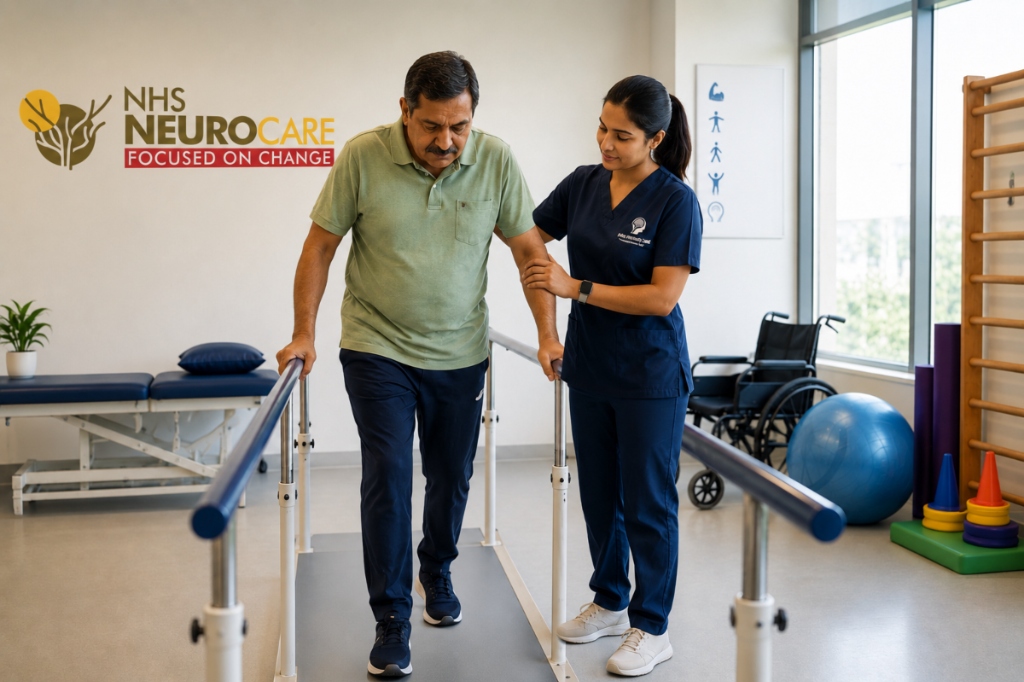
Neuro-Physiotherapy: Strength, balance, walking gait & posture restoration Occupational Therapy: Hand function, fine motor & daily self-care tasks Speech & Language: Speech clarity, comprehension & dysphagia swallowing therapy Neuropsychology: Memory retraining, cognitive therapy & emotional adjustment Nutritional Support: Custom healing diet plans tailored for recovery Family Education: Caregiver training, home exercises & stroke preventionYour Stroke Recovery Journey
Emergency Care
Rapid diagnosis & treatment at Stroke Ready Centre
Stroke ICU
24x7 critical monitoring & stabilisation
Early Therapy
Rehab begins within 24–48 hours of stability
Functional Rehab
Personalised mobility, speech & occupational therapy
Long-Term Care
Ongoing follow-up & caregiver home guidance
Conditions That Benefit from Stroke Rehabilitation
Frequently Asked Questions
Recovery Begins Here
At NHS Neurocare (a unit of NHS Hospital), we believe that stroke recovery is about more than surviving—it is about helping every patient regain confidence, independence, and the ability to enjoy everyday life. Through our comprehensive Stroke Rehabilitation Programme, experienced multidisciplinary team, and patient-centred approach, we are committed to supporting every step of your recovery journey.