Mechanical Thrombectomy
Advanced Clot Removal Treatment for Acute Ischaemic Stroke at NHS Neurocare (a unit of NHS Hospital)
Advanced Clot Removal Treatment for Stroke
When a stroke occurs, every minute matters. Delayed treatment can lead to permanent brain damage, disability, or even loss of life. At NHS Neurocare (a unit of NHS Hospital), our Stroke Ready Centre offers Mechanical Thrombectomy, one of the most advanced and effective treatments for selected patients with acute ischaemic stroke caused by a blocked large brain artery.
Mechanical Thrombectomy is a minimally invasive, life-saving procedure that removes the blood clot responsible for the stroke, restores blood flow to the brain, and significantly improves the chances of recovery when performed promptly by our team led by Dr Sandeep Goel (DM Neurology).
Backed by our experienced multidisciplinary stroke team, advanced 3D Flat Panel Neuro Cath Lab, 24×7 CT & Silent MRI, and Dedicated Stroke ICU, NHS Neurocare provides comprehensive stroke care under one roof.
What is Mechanical Thrombectomy?
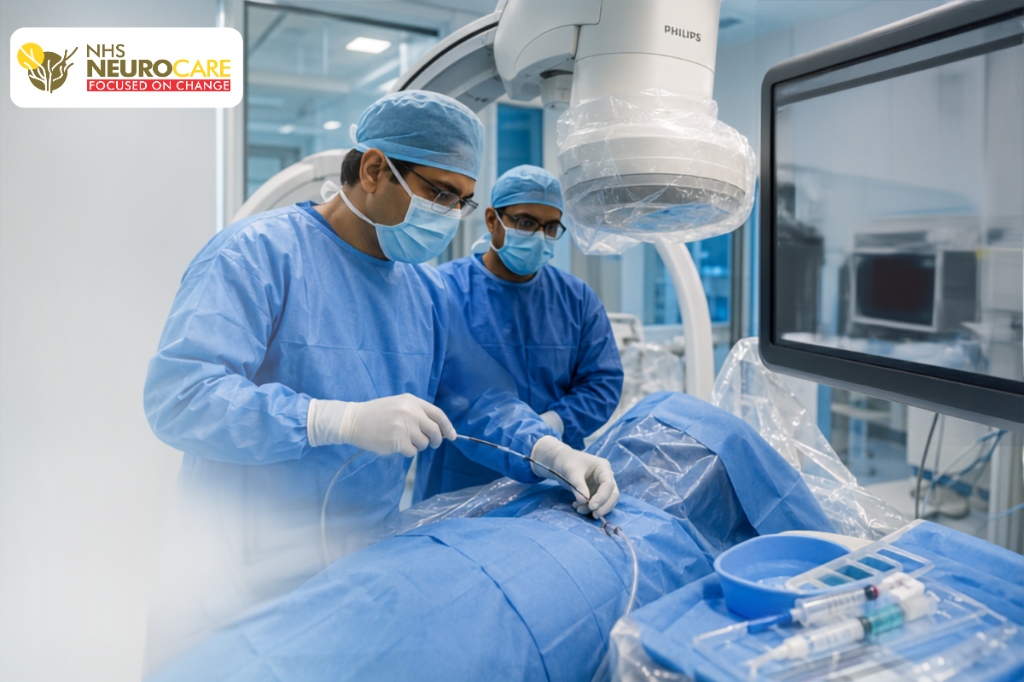
Mechanical Thrombectomy is an advanced endovascular stroke treatment in which a specially designed catheter is guided through a blood vessel to the blocked artery in the brain. Using specialised devices, the clot is carefully removed, allowing blood flow to return to the affected area of the brain.
Unlike traditional surgery, Mechanical Thrombectomy is performed through a tiny puncture in the groin or wrist, without opening the skull. This minimally invasive approach reduces trauma and offers faster recovery for eligible patients.
Today, Mechanical Thrombectomy is recognised worldwide as the standard of care for selected patients with large vessel occlusion (LVO) stroke.
Why Every Minute Matters
During an acute ischaemic stroke, the brain loses nearly 1.9 million nerve cells every minute that blood flow remains blocked. Early restoration of blood circulation can:

Save healthy brain tissue
Significantly reduce permanent disability
Improve speech & movement recovery
Preserve memory & cognitive function
Increase patient independence
Improve long-term quality of life
Who Can Benefit from Mechanical Thrombectomy?
Patients with Acute Ischaemic Stroke Large Vessel Occlusion (LVO) Blockages Sudden weakness or paralysis on one side Speech or language difficulty Facial drooping or loss of vision Patients presenting within eligible windowHow is Mechanical Thrombectomy Performed?
Stroke Triage
Rapid emergency assessment upon arrival
Brain Scan
24x7 CT / Silent MRI to map clot location
Planning
Neuro-intervention team treatment strategy
Intervention
Catheter clot removal in 3D Cath Lab
Stroke ICU
24x7 critical monitoring & rehabilitation
Advantages of Mechanical Thrombectomy
Recognise Warning Signs of Stroke – Remember BE FAST
If you notice any of these symptoms, seek emergency medical attention immediately:
Balance
Sudden loss of balance or coordination
Eyes
Sudden blurred or loss of vision
Face
One side of the face droops
Arm
Weakness or numbness in one arm
Speech
Slurred speech or difficulty speaking
Time
Every second counts! Reach Stroke Ready Centre.
Frequently Asked Questions
Restoring Blood Flow. Restoring Hope.
At NHS Neurocare (a unit of NHS Hospital), our Stroke Ready Centre is committed to providing timely, evidence-based stroke treatment using the latest advances in neurovascular care. Mechanical Thrombectomy, supported by advanced imaging, a 3D Flat Panel Neuro Cath Lab, a Dedicated Stroke ICU, and an experienced multidisciplinary team, offers eligible patients the best opportunity for improved recovery and a better quality of life.