Nerve & Muscle Disorders
Expert Diagnosis and Comprehensive Care for Nerve and Muscle Disorders
Nerve & Muscle Disorders Care
The nervous system and muscles work together to perform every movement, from walking and speaking to breathing and swallowing. When either the nerves or muscles are affected, even the simplest daily activities can become challenging.
At NHS Neurocare (A Unit of NHS Hospital), we provide comprehensive diagnosis, treatment and long-term management for a wide range of nerve and muscle disorders.
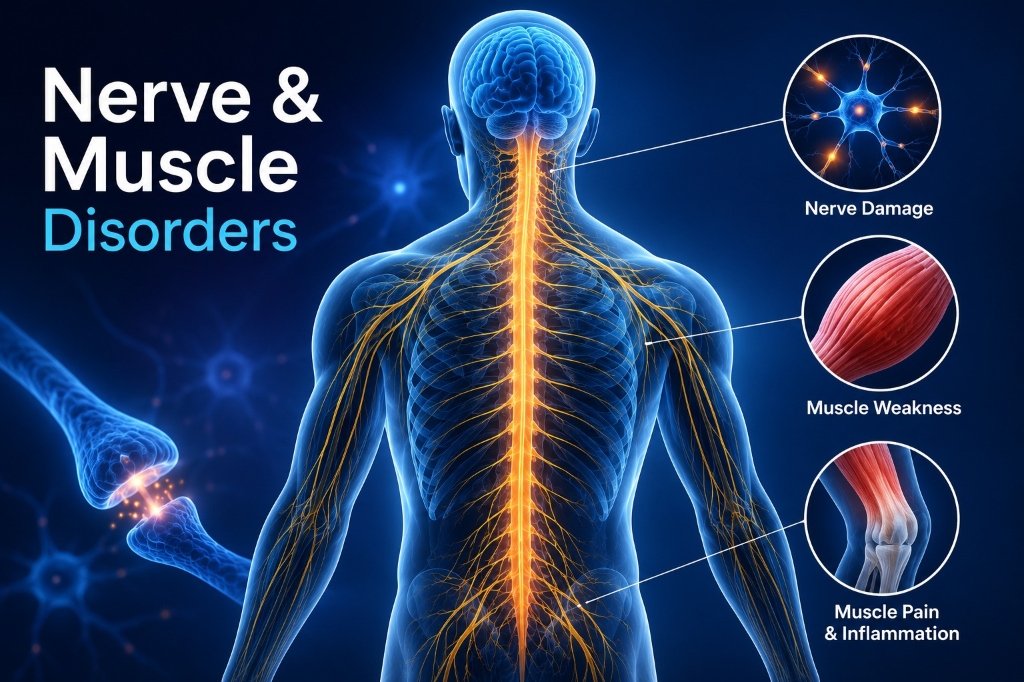
Our experienced neurologists utilise advanced diagnostic technology and evidence-based treatments to accurately identify the underlying cause and develop personalised treatment plans for every patient.
Whether symptoms develop suddenly or gradually over time, early diagnosis and expert intervention can significantly improve recovery, preserve function and enhance quality of life.
Conditions We Treat
- Peripheral Neuropathy
- Myasthenia Gravis
- Guillain-Barré Syndrome (GBS)
- Myopathy
- Muscular Dystrophy
- Inflammatory Muscle Diseases
- Motor Neuron Disease (MND)
- Nerve Compression Syndromes
- Carpal Tunnel Syndrome
- Bell’s Palsy
- Facial Nerve Disorders
- Diabetic Neuropathy
- Alcoholic Neuropathy
- Vitamin Deficiency Neuropathy
- Hereditary Neuropathies
- CIDP
- Muscle Weakness Disorders
- Tremors & Movement Disorders
Common Symptoms You Should Not Ignore
Consult a neurologist if you experience:
- Persistent muscle weakness
- Difficulty climbing stairs
- Difficulty lifting objects
- Frequent muscle cramps
- Muscle twitching
- Tingling or numbness
- Burning sensation
- Loss of balance
- Difficulty walking
- Foot drop
- Difficulty swallowing
- Double vision
- Drooping eyelids
- Loss of muscle bulk
- Fatigue during activities
These symptoms may indicate an underlying neurological or neuromuscular disorder requiring specialist evaluation.
Advanced Diagnostic Services
Accurate diagnosis is the first step towards successful treatment. At NHS Neurocare, we utilise modern neurological investigations, including:
- MRI & CT Scan
- Electromyography (EMG)
- Nerve Conduction Studies (NCV)
- Electroencephalography (EEG), when indicated
- Blood Investigations & Autoimmune Screening
- Metabolic Evaluation & Genetic Testing
- Clinical Neurological Assessment
These investigations enable our specialists to determine the exact cause of nerve or muscle dysfunction and recommend the most effective treatment.
Personalised Treatment Options
Medical Management
Many nerve and muscle disorders can be effectively managed with medications that reduce inflammation, improve nerve function, strengthen muscle activity or control autoimmune processes.
Immunotherapy
Certain autoimmune neurological disorders, including Myasthenia Gravis, Guillain-Barré Syndrome (GBS) and CIDP, may require specialised immunotherapy to control disease activity and improve recovery.
Rehabilitation and Physiotherapy
Recovery often requires structured rehabilitation programmes that focus on:
- Muscle strengthening
- Balance training & Fall prevention
- Walking improvement
- Mobility restoration
- Functional independence
Nutritional & Long-Term Support
Nutritional Support
Some neuromuscular disorders are influenced by nutritional deficiencies. Our multidisciplinary team provides dietary guidance to support recovery and overall neurological health.
Long-Term Follow-Up
Many neuromuscular disorders require ongoing monitoring. Our specialists provide regular reviews to assess treatment response, modify medications when needed and help patients maintain the best possible quality of life.
Why Choose NHS Neurocare?
- Experienced DM Neurologists with specialised expertise
- Comprehensive Neuromuscular and Nerve-Muscle Evaluation
- Advanced EMG, EEG, and Nerve Conduction Testing facilities
- Modern MRI & CT Imaging inside the clinic
- Personalised long-term treatment and disease plans
- Multidisciplinary Rehabilitation and dedicated Physiotherapy support
- 24/7 Emergency Neurology services and Stroke Ready Centre
- Evidence-based neurological care and compassionate, patient-centred approach
Frequently Asked Questions (FAQs)
1. What causes muscle weakness?
Muscle weakness may result from nerve disorders, muscle diseases, autoimmune conditions, vitamin deficiencies, infections or neurological disorders. A specialist evaluation is essential to determine the underlying cause.
2. When should I consult a neurologist for numbness?
If numbness is persistent, worsening, affects one side of the body, or is associated with weakness, difficulty walking or loss of balance, you should seek neurological assessment promptly.
3. What is peripheral neuropathy?
Peripheral neuropathy is damage to the peripheral nerves that may cause numbness, tingling, burning pain or weakness, particularly in the hands and feet.
4. Is muscle weakness always a sign of ageing?
No. Persistent muscle weakness is not a normal part of ageing and may indicate an underlying neurological or muscular disorder.
5. What is EMG?
Electromyography (EMG) is a specialised test that evaluates the health of muscles and the nerves controlling them. It helps diagnose many neuromuscular disorders accurately.
6. Can nerve damage be treated?
Many nerve disorders improve with early diagnosis, appropriate medication, rehabilitation and management of the underlying cause. The outcome depends on the type and severity of nerve damage.
7. What is Guillain-Barré Syndrome (GBS)?
GBS is a rare neurological disorder in which the body’s immune system attacks the peripheral nerves, causing rapidly progressive weakness. Early diagnosis and specialised treatment can significantly improve recovery.
8. What is Myasthenia Gravis?
Myasthenia Gravis is an autoimmune condition that causes muscle weakness, commonly affecting the eyes, face, swallowing and limb muscles. It is treatable with appropriate medical care.
9. Can physiotherapy help nerve and muscle disorders?
Yes. Physiotherapy plays a vital role in improving muscle strength, balance, mobility and overall functional recovery in many neuromuscular conditions.
10. Why is early diagnosis important?
Early diagnosis allows treatment to begin before permanent nerve or muscle damage develops, improving the chances of recovery and maintaining independence.
Restoring Strength. Improving Lives.
At NHS Neurocare, we appreciate that weakness, numbness, and muscle disorders can disrupt every part of daily life. Our objective is to identify the underlying cause early, offer a precise diagnosis through advanced neurological investigations, and provide personalised treatment accompanied by rehabilitation and compassionate care.
Whether you are suffering from unexplained muscle weakness, nerve pain, tingling, balance difficulties, or a diagnosed neuromuscular condition, our experienced neurology team is dedicated to helping you restore strength, confidence, and a better quality of life.
Expert Neurology. Advanced Diagnostics. Comprehensive Care. That’s the NHS Neurocare commitment.